
Public & Science Sweden has set up a national resource centre for training in science communication, offering courses, support and opportunities for knowledge exchange. At the same time, a European counterpart is being developed via the COALESCE project, with Public & Science representing Sweden as the national hub.
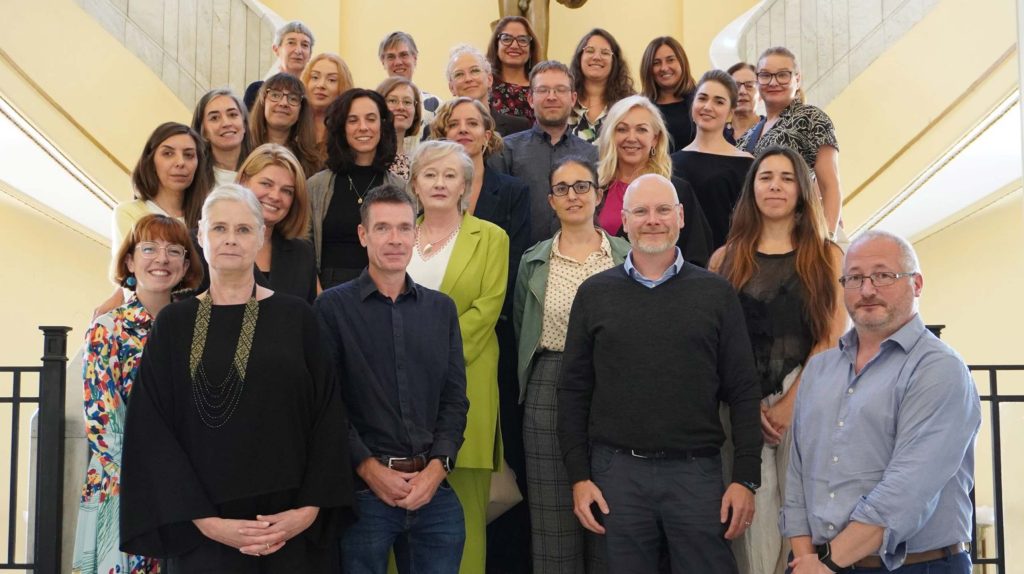
“We want to help explore how research can be communicated during crises, how to address and prevent the spread of disinformation, and how to build trust through credible communication,” says Lotta Waesterberg Tomasson, Head of Communications at Public & Science, who took part in the COALESCE project meeting in Madrid earlier this autumn.
The project aims to promote best practices in science communication and strengthen its role in decision-making, including through policy recommendations directed at European policymakers.
“This is an excellent opportunity to share experience and good practice across countries, while strengthening our national preparedness in science communication by bringing together decision-makers, practitioners and other actors in research and innovation,” says Lotta W. Tomasson.
Mutual learning through knowledge exchange
As part of this policy work, COALESCE has launched a so-called Mutual Learning Exercise (MLE) on science communication – an initiative designed to promote knowledge exchange and mutual learning between different actors in the research and innovation ecosystem.
Participants include national representatives from nine governments, research funders, universities, and research institutes, who will be paired with practitioners and communication experts. From Sweden, Public & Science participates together with Anna Maria Fleetwood from the Swedish Research Council.
“The goal is to develop common European guidelines and policy recommendations, and to support those working with science communication across Europe. It is also a chance to share successes and good examples between countries, identify common obstacles and challenges, and strengthen our national capacity by bringing together decision-makers, practitioners and other actors in research and innovation,” says Lotta W. Tomasson.
Themes of the MLE
The Mutual Learning Exercise will explore on four themes:
- Mapping the landscape: National authorities’ work with science communication
- Science and trust: Public perceptions of and engagement with research and science
- Science communication in times of crisis: Mobilising responses and managing mis- and disinformation
- Skills and competency development: A practical framework for science
“Science communication is crucial for building trust between science and society. Through the MLE and wider COALESCE project, we hope to strengthen cooperation with European partners and share Swedish perspectives on how research – and communication about research – can be made more accessible and effective,” says Lotta W. Tomasson.
Nine European countries are taking part in the MLE on Science Communication: Estonia, France, Germany, Ireland, Lithuania, Portugal, Spain, Sweden and the United Kingdom. The exercise builds on previous experience from past MLEs in citizen science and public engagement. Download a factsheet about the MLE.
