Good science communication requires expertise from multiple perspectives
Communicating knowledge and research is more important than ever. Successful science communication requires collaboration between researchers and university communication professionals, built on trust and mutual respect.
In a 2023 survey of 3,864 Danish researchers and PhD students, 71% of researchers and 64% of PhD students said that they themselves are responsible for communicating their research to the public. One in five believe that the university’s communications department is responsible.
Most researchers therefore see communication as an individual responsibility, leading to considerable variation in how research reaches the public. At the same time, researchers do not necessarily know how to communicate their research or have the desire or confidence to do so. Communication requires specific skills that many researchers rarely have the time or experience to develop.
Communication requires specific skills that many researchers rarely have the time or experience to develop.
In 2022, as part of my master’s degree in Journalism and Communication at the University of Southern Denmark, I examined how nine heads and managers of communications from six Danish universities worked with science communication. I focused particularly on their collaboration and relationships with researchers when research was communicated to the public.
My interviews showed that, in several places, there was no clear strategy for the university’s science communication. Only two of the nine respondents said they had a strategy that could be actively used in their work with researchers. Much of the work was carried out on an ad hoc basis, as one of many tasks handled by the communications department.
Collaboration between researchers and communication professionals is important. When they work closely together, research has greater reach and impact. In some cases, however, researchers do not fully recognise communication professionals’ expertise, for example by involving them too late or insisting on technical or academic language.
Communication professionals are experts at making complex knowledge accessible to the public, but their work is often seen as a support function rather than an integral part of “proper” science communication for academic peers. Research and knowledge need to be put to work in society. They should become part of everyday life, public debate and decision-making. This requires us to take science communication as seriously as teaching and research and build the structures needed to support it.
Science communication is not a hobby. It is an important task and a responsibility that strengthens both society and democracy.
Science communication is not a hobby. It is an important task and a responsibility that strengthens both society and democracy. But because this responsibility rarely comes with more space in the calendar, it is difficult for many researchers to live up to it. When communication has to be done alongside research, teaching and other responsibilities, it simply becomes an additional task.
To communicate research clearly and credibly, a solid foundation is needed: knowledge, training and time. Without all three, it is difficult to make science communication work in practice.
/Pernille Fløjstrup Andersen
About the report
The report is divided into two parts and examines the public’s interest in science, as well as researchers’ attitudes towards, interest in, and use of science communication with the public.
- Population Survey: A questionnaire was distributed by Epinion in spring 2023 to 1,101 citizens, representing a representative sample of Danes over the age of 18.
- Researcher Survey: A questionnaire was distributed by Epinion in autumn 2023 to scientific staff and PhD students at all Danish universities, resulting in 3,864 responses.
Do you hear what I am saying? – and do you know what I am thinking? December 2023
About the writer
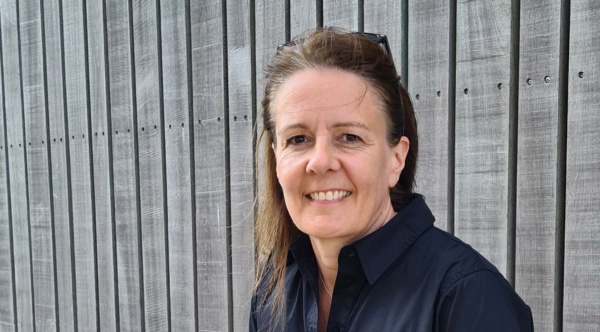
Pernille Fløjstrup Andersen holds a master’s degree in journalism (Cand.public.) from the University of Southern Denmark, specializing in science, research, and strategic communication. She is also a trained journalist from the Danish School of Media and Journalism.
With almost 25 years of experience as a journalist, editor, and communications advisor, she currently focuses on science communication, project management, and networking. Her work includes developing projects, building relationships, and connecting researchers, communication professionals, and other stakeholders.
Skapad: 02 oktober 2026
Senast ändrad: 02 oktober 2026