Young People Shaping Food Choices
How are young people’s food choices influenced by their food environments? Public & Science Sweden is exploring this together with researchers, school pupils and Uppsala Municipality. The project is funded by Forte (the Swedish Research Council for Health, Working Life and Welfare) and runs from 2026 to 2028.
Our food environments can be understood as the entire physical, economic, political, social and cultural context in which we, as consumers, interact with the food system. But who actually has the power to shape our food choices, and how are young people influenced by the food environments around them? Researchers at Karolinska Institutet and Uppsala University are exploring these questions together with Public & Science Sweden and school pupils in the citizen science project Young People Shaping Food Choices (Ungas matmakt).
Although young people’s eating habits have a major impact on health throughout life, there is still limited knowledge about how young people themselves experience, influence and can help change the food environments they encounter in everyday life. By placing young people’s perspectives at the centre, the project aims to generate new knowledge about how healthier food environments can be developed together with young people. The results could provide valuable guidance for municipalities and other actors seeking to create environments that make healthy food choices easier for young people.
How will the project be carried out?
The project works with young people aged 15–19 in Uppsala, who take part as citizen scientists.
Step 1
The first stage of data collection consists of interviews with upper secondary school students in Uppsala. The interviews focus on (1) what young people themselves consider to be unhealthy eating, (2) what they think contributes to such eating habits, and (3) what needs to change in the food environment to reduce unhealthy eating.
The aim is twofold. First, to explore whether, and if so how, these perceptions vary between different groups of young people. Second, to understand at group level how young people connect (1) different forms of unhealthy eating with (2) their perceptions of what contributes to them and (3) what they believe should change in the food environment.
During the project, a panel made up of young people and representatives from the food sector will be established and meet regularly. The panel will both provide advice to the project and serve as a platform for dialogue.
Step 2
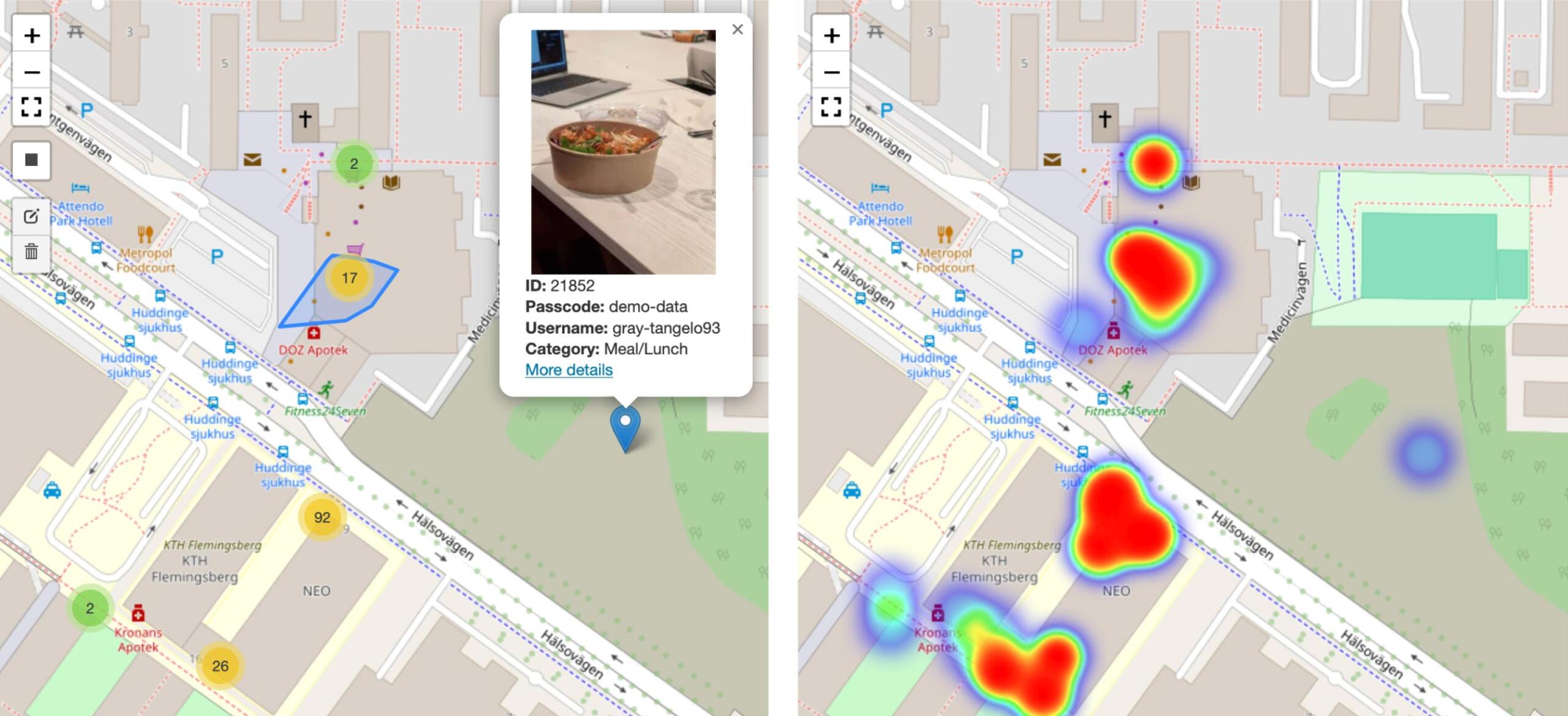
While Step 1 focuses on how ideas about unhealthy eating are distributed among young people, Step 2 looks at the physical food environment and the actual, observable food choices young people make. A larger group of young people will use an app to photograph what they buy within their food environment, as well as when and where they make these purchases. Together with the knowledge generated in Step 1, this material will then form the basis for workshops in which young people analyse the images and discuss how they believe the food environment influences food choices and health.
Step 3
In the third and final stage of the project, young people will work in dialogue with local decision-makers in the food sector to develop proposals for how their local food environments could be changed to encourage healthier food choices.
Participating researchers
Would you like to know more about the research carried out within the project? You are welcome to contact the participating researchers at Karolinska Institutet and Uppsala University.
- Helle Alvesson, researcher at the Department of Global Public Health, Karolinska Institutet
- Jonas Idevall Hagren, PhD student at the Department of Global Public Health, Karolinska Institutet
- Meena Daivadanam, Professor at the Department of Women’s and Children’s Health, International Maternal and Child Health and Nutrition, Uppsala University
- Stefan Peterson, Professor at the Department of Global Public Health, Karolinska Institutet
- Ioannis Sarafis, Arbisense
- Jonas Nord, collaboration strategist in health, support, care and social services, Uppsala Municipality
Created: 02 October 2026
Last edited: 02 October 2026
Contact


Funding
Young People Shaping Food Choices (Ungas matmakt) is a collaboration between researchers at Karolinska Institutet and Uppsala University and the non-profit organisation Public & Science Sweden. The technology company Arbisense and Uppsala Municipality are also involved in the project. The project is funded by Forte (the Swedish Research Council for Health, Working Life and Welfare) and runs from 2025 to 2028.