How can we combine citizen science and Service-Learning in higher education to tackle societal challenges?
EPiCS aims to build bridges between science and society

In EPiCS – ENGAGE PEOPLE in CITIZEN SCIENCE, a three-year Erasmus+ project, we are bringing together higher education institutions, students, researchers and local communities to address real-world challenges through co-creation and public engagement in science.
EPiCS is built on a simple but powerful idea: research becomes more meaningful when society is directly involved. By combining citizen science and Research Service-Learning (RS-L), the project aims to create new opportunities for communities, students and researchers to work together, co-design new research initiatives and generate knowledge that responds to real social needs.
The project brings together partners from across Europe in a joint effort to strengthen community engagement, improve research literacy and support more inclusive forms of academic practice.
What is EPiCS?
Students and researchers will develop ways for universities to work together with local organisations and members of the public to explore concrete challenges, develop evidence-based responses and produce practical outputs such as reports, policy recommendations, action plans and educational resources.
The project is built around three main objectives:
- Research skills – helping students and communities understand and apply scientific methods.
- Community engagement – encouraging universities, researchers and students to engage actively with local and global issues.
- Societal relevance – ensuring that research responds to the needs, questions and priorities of communities.
Through this approach, EPiCS promotes a model of higher education in which universities are not isolated centres of knowledge, but active partners in building better-informed, more democratic and more resilient societies.
Citizen science is at the heart of the project
Citizen science plays a central role in EPiCS. It involves people who are not professional researchers in one or more parts of the research process, from collecting and analysing data to formulating research questions, testing methods and communicating results.
This approach helps break down barriers between academia and society. It enables members of the public to contribute to scientific progress while also fostering greater trust in science, critical thinking and a deeper understanding of how research works.
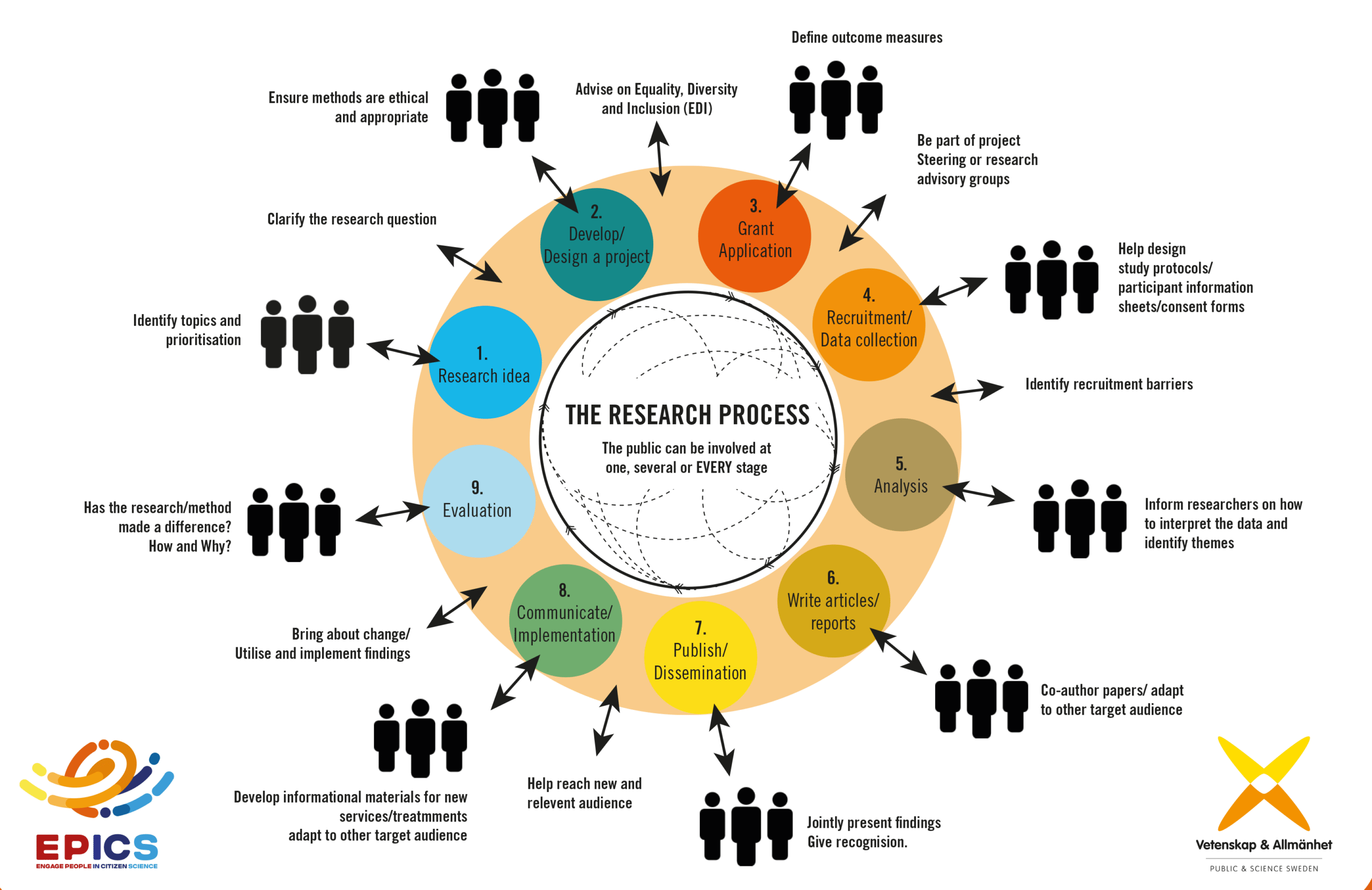
Within EPiCS, citizen science will support data-informed decision-making, active learning experiences for students, and stronger collaboration between universities and local organisations.
Engaging society through co-created research
Co-created research aims to enable members of the public to move beyond being research subjects or assistants and instead become active partners in the research process.
By integrating Research Service-Learning approaches, EPiCS encourages students and researchers to work directly with people in local communities to identify challenges, co-design solutions and create meaningful social impact. This approach not only enriches students’ academic learning, but also helps strengthen trust, dialogue and community engagement.

What will EPiCS do?
Over the coming years, EPiCS will develop and test innovative ways of connecting research, learning and community engagement.
The project will:
- Launch six pilot initiatives across Europe.
- Develop an open online platform to support dialogue, participation and co-creation in research.
- Organise co-creation activities and workshops.
- Produce guidelines and a toolkit to support the long-term adoption of citizen science and Research Service-Learning approaches.
These activities will help students, researchers, citizens and community organisations work together in meaningful ways and contribute to solutions to shared societal challenges.
Together, we can make research more connected, inclusive and effective in delivering benefits for society.
Created: 09 July 2026
Last edited: 29 September 2026