Bringing soil to life: the LOESS journey in Sweden
For three and a half years, Public & Science Sweden has been working with partners across Europe to make the world beneath our feet more visible. Through the Horizon Europe project LOESS, we have helped develop new educational resources, involved thousands of pupils and members of the public in hands-on activities, and created spaces for researchers, students and other stakeholders to explore why healthy soils matter.
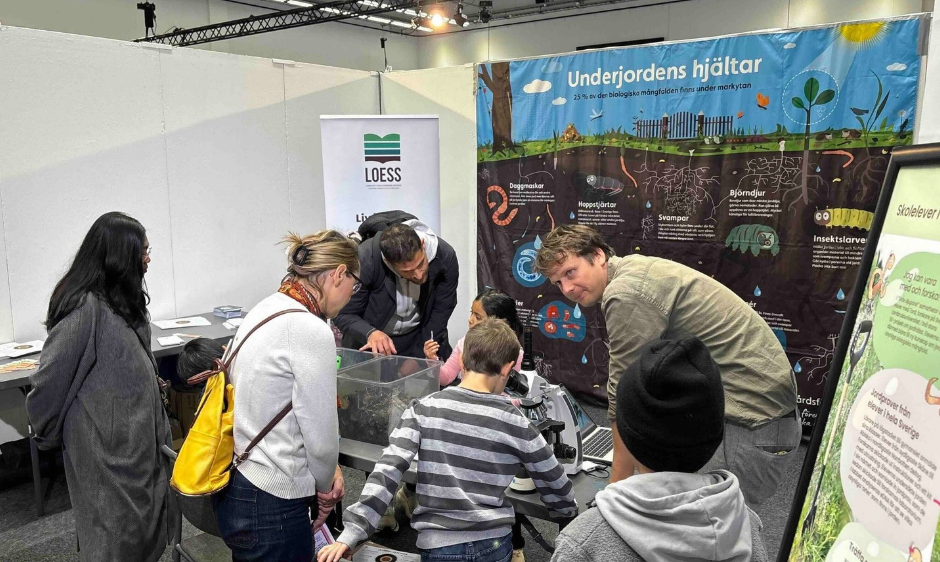
Soil researcher Tord Ranheim Sveen from the Swedish University of Agricultural Sciences (SLU) engages members of the public in hands-on activities at SciFest in Uppsala Photo: Kjell Bolmgren
As LOESS comes to an end, one of our final activities took place at SciFest in Uppsala, where soil researcher Tord Ranheim Sveen from the Swedish University of Agricultural Sciences (SLU) joined us for hands-on activities that engaged around 400 visitors.
Experiential learning has been at the heart of LOESS. Across Sweden, Public & Science Sweden has taken soil activities to science festivals, schools, farms, science centres and other public events, directly engaging around 3000 people through the project’s public campaign.
During ForskarFredag 2025, The Earth Beneath Our Feet became the national theme, with activities around the country inviting visitors to investigate everything from soil organisms and decomposition to fungi, carbon and soil health.
From learning about soil to contributing to research
This approach reached an even larger scale in 2026 through Dig Deeper (Gräv djupare), our nationwide citizen science project for schools. More than 4,000 pupils in over 200 classes across 56 municipalities investigated soil biodiversity and contributed samples to research led by Tord Ranheim Sveen at SLU.
The project combined real research with learning. Teachers were supported with information and educational resources, including LOESS lesson packages, so that pupils could explore soil health and biodiversity alongside their practical investigations.
Creating resources for soil learning
Public & Science Sweden coordinated the LOESS work to develop a wide range of educational resources, including learning scenarios, digital tools, a soil glossary, a MOOC, higher education modules, a teaching blueprint and European case studies. These are brought together in the LOESS Soil Atlas helping educators and other users find resources suited to different learning contexts.
In Sweden, these resources have been promoted and adapted through activities linked to ForskarFredag, Dig Deeper and other engagement initiatives, helping connect the European project with national educational contexts and audiences.
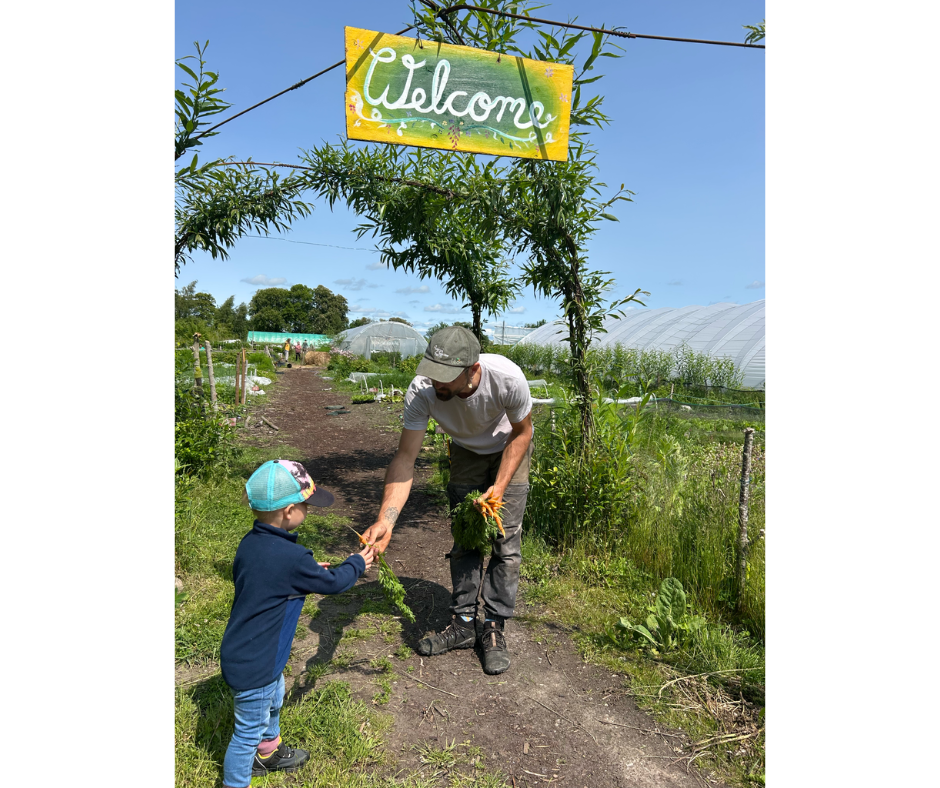
Co-creation with university students
Public & Science Sweden also contributed to LOESS work on experiential learning for university students and young professionals.
Across 15 countries, panel discussions, workshops and international meetings helped students identify the knowledge and competencies they believed would be needed to tackle future soil-health challenges. Their input fed into the development of the Science.Learns.Soil training modules.
In Sweden, we organised three panel discussions and workshops at Lund University, exploring topics including soil as a carbon sink, land use and sustainable food production.
We also organised the LOESS International Summer Camp, bringing together students from Germany, Italy, Türkiye and Serbia to share experiences from national soil camps, meet science-for-policy experts and discuss their visions for the future of Europe’s soils.
Building connections around soil health
Another important part of our work has been coordinating a Swedish Community of Practice on soil health, bringing together different perspectives and helping connect LOESS with Swedish needs, stakeholders and networks.
This dialogue also extended to activities such as our roundtable on soil health and societal preparedness at the Folk och Forskning (Science and Society) conference where researchers, farmers, municipalities, funders and others discussed the links between healthy soils, resilient food systems and preparedness.
A legacy beyond the project
LOESS may be ending, but the resources, approaches and relationships created through the project will continue to be useful.
For Public & Science Sweden, the project has shown the value of combining education, citizen science, public engagement and dialogue. The educational resources can continue to be used by teachers and communicators and the networks built through LOESS can support future collaboration around soil health.
Perhaps the most important lesson is that soil literacy is not built through information alone. It grows when people are given opportunities to investigate, experience, question and contribute.
After three years of digging deeper, that is something we intend to continue.
Created: 09 November 2026
Last edited: 09 November 2026