Our annual Citizen Science project
An annual nationwide citizen science initiative enabling school pupils and members of the public across Sweden to contribute to real research. Public & Science Sweden has coordinated the projects as part of ForskarFredag since 2009.
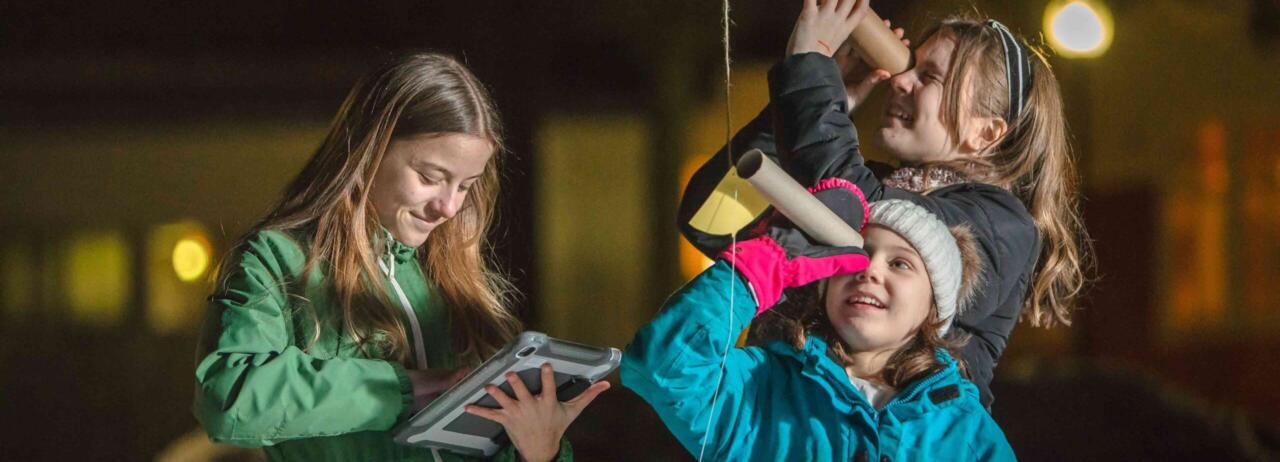
Each year, Public & Science Sweden works with researchers to develop a citizen science project in which schools – and, depending on the research question, other members of the public – contribute to genuine research.
The projects, previously known as ‘mass experiments’, create benefits for everyone involved. Researchers can gather large amounts of data from across Sweden that would otherwise be difficult to collect, while participants gain first-hand experience of how research works and how new knowledge is created.
For schools, the projects provide teaching materials grounded in current research and give pupils opportunities to practise scientific methods, critical thinking and data collection while contributing to a real research study.
From research question to citizen science project
Public & Science Sweden works closely with participating researchers to develop each project and adapt the research methods so that they can be used by schools and other participants across the country.
Together, we develop instructions, teaching materials and other resources to support participation. The research topic and activities are designed, where possible, to connect with the school curriculum. Researchers also interact directly with participating pupils and teachers through webinars, films and other forms of communication.
Once the research has been completed, results are shared back with participants so that they can see how their contributions have helped generate new knowledge.
The citizen science project forms part of ForskarFredag, Sweden’s European Researchers’ Night initiative, which creates opportunities for researchers and the public to meet and engage with research.
Recent examples:
- 2026 Dig Deeper School pupils collected soil samples from parks and green spaces across Sweden to help researchers investigate soil health and the largely invisible biodiversity beneath our feet.
- 2025 How do you feel good? Older people across Sweden contributed their experiences of what helps them feel well as they age, generating knowledge for research into ageing and mental health.
- 2024 Voices of the Walls Pupils documented and analysed messages found on the walls of Swedish schools, helping researchers explore what school environments communicate to pupils.
- 2022-2023 The Plastic Experiment Schools and members of the public investigated plastic waste in the Swedish natural environment.
- 2021 The Housing Experiment Participants investigated how accessible Sweden’s housing is for older people.
- 2020 The Food Waste Experiment The project explored whether increased knowledge and awareness could help reduce household food waste.
- 2019 The Star-Spotting Experiment Participants counted stars in the night sky to help researchers investigate light pollution.
- 2018 The Lady Bird Experiment Participants documented ladybirds across Sweden, combining citizen science and artificial intelligence to contribute to biodiversity research.
- 2017 The News Evaluator Experiment Young people investigated the news appearing in their online feeds and developed their skills in source criticism.
- 2016 The Notice Board Experiment The project explored the role of physical notice boards in the digital age. The research was subsequently published in the open-access journal PLOS ONE PLOS One.
Our experience of running nationwide citizen science projects since 2009 has also contributed to research on citizen science itself. Public & Science Sweden has shared lessons from the projects in the Journal of Science Communication, exploring how citizen science can contribute both to scientific research and to participants’ understanding of research and scientific methods.
Created: 02 May 2009
Last edited: 29 September 2026