Successful Public Involvement in Research – PPI Workshops
There is a strong and growing interest in co-creation and public involvement in research. During 2024–2025, Public & Science Sweden, commissioned by the Karolinska Institute (KI), ran a four-part workshop series on co-creation and citizen science in health research, with a particular focus on Patient and Public Involvement (PPI).
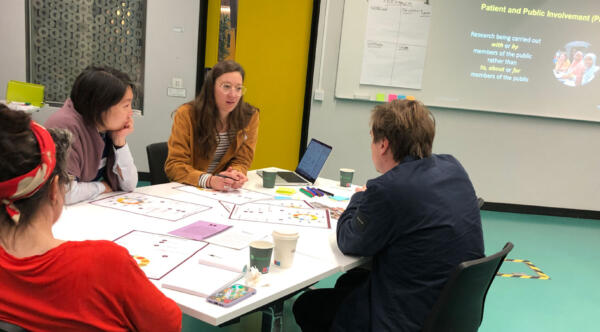
The aim of the workshop series was to strengthen researchers’ knowledge of co-created research and to explore the potential for establishing a PPI network at KI. Researchers and research support staff from a wide range of KI departments took part.
Participants expressed a clear need for more knowledge, discussion and peer learning on PPI. This aligns with the increasing interest from research funders, who are now more frequently requesting well-thought-out approaches to co-creation. The most common question raised was: How do you do this in practice?
Participants particularly requested:
- support with recruiting patients and members of the public
- templates for reimbursement, agreements and co-authorship
- examples of how PPI can be integrated throughout the entire research process to support planning
Workshop 1: Why PPI? – Opportunities, needs and barriers
Researchers Pernilla Lagergren, Eric Asaba and Carolina Wannheden shared their experiences, followed by a World Café session – a dialogue method in which participants rotate between small tables to explore a topic through several rounds of discussion. Key themes included recruitment, ethical guidelines and organisational barriers. There was a strong focus on opportunities, ranging from innovation and new perspectives to making research more engaging and meaningful.
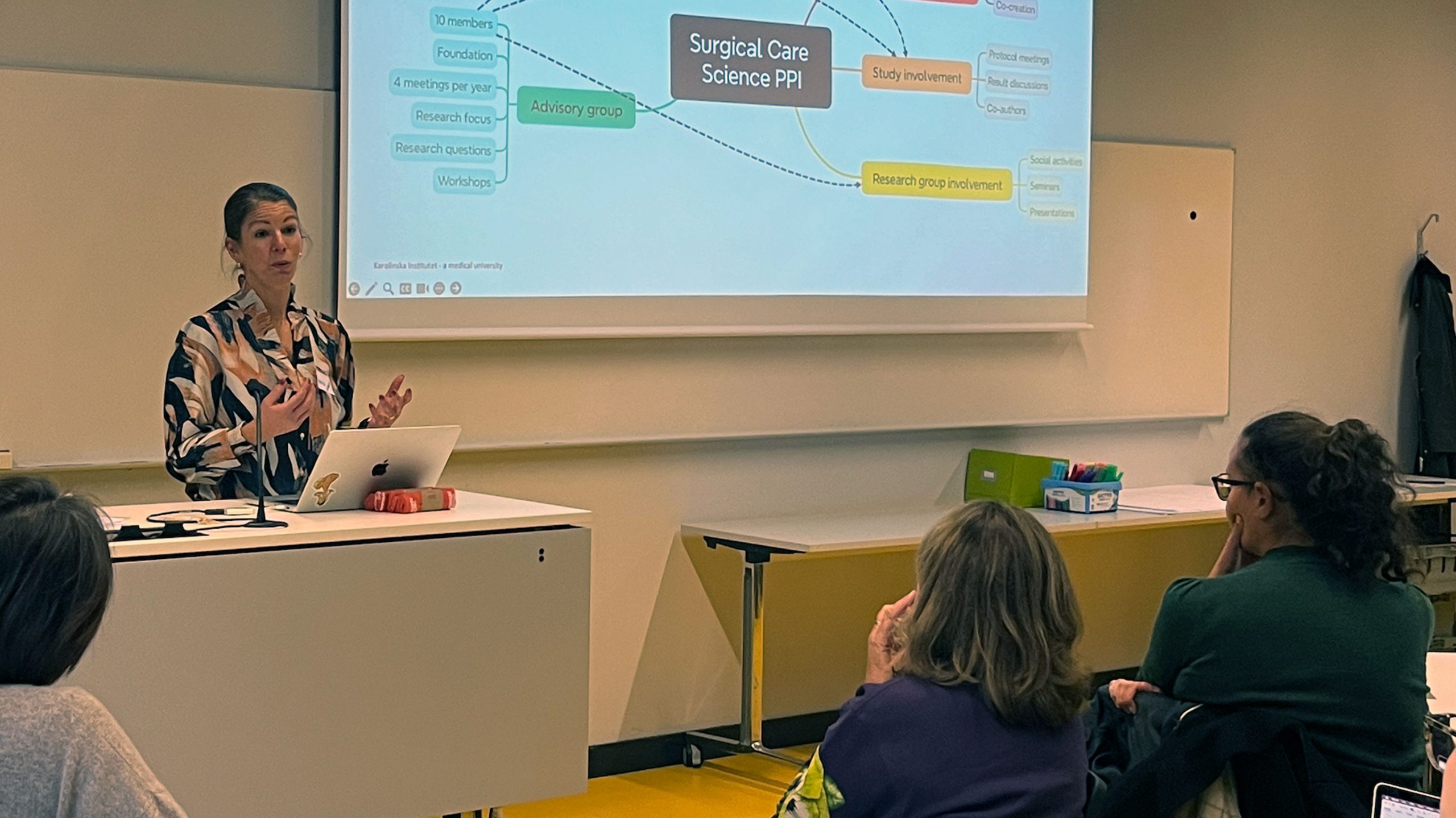
The discussions highlighted:
- the need to involve people with lived experience of the research topic
- challenges in identifying and reaching groups that are underrepresented in research
- demand for support related to GDPR, reimbursement models, co-authorship and collaboration agreements
- the many benefits of PPI, including increased relevance, stronger research questions, a “reality check”, improved implementation and greater equity
Workshop 2: How do you do it? – Practical tools and the PPI canvas
The second workshop moved from theory to practice. KI researcher Ioannis Parodis and co-researcher Yvonne Enman shared their experiences. Yvonne Enman highlighted the gap between clinical priorities and patients’ everyday lives: There is often a mismatch between what doctors consider important and what patients actually need.
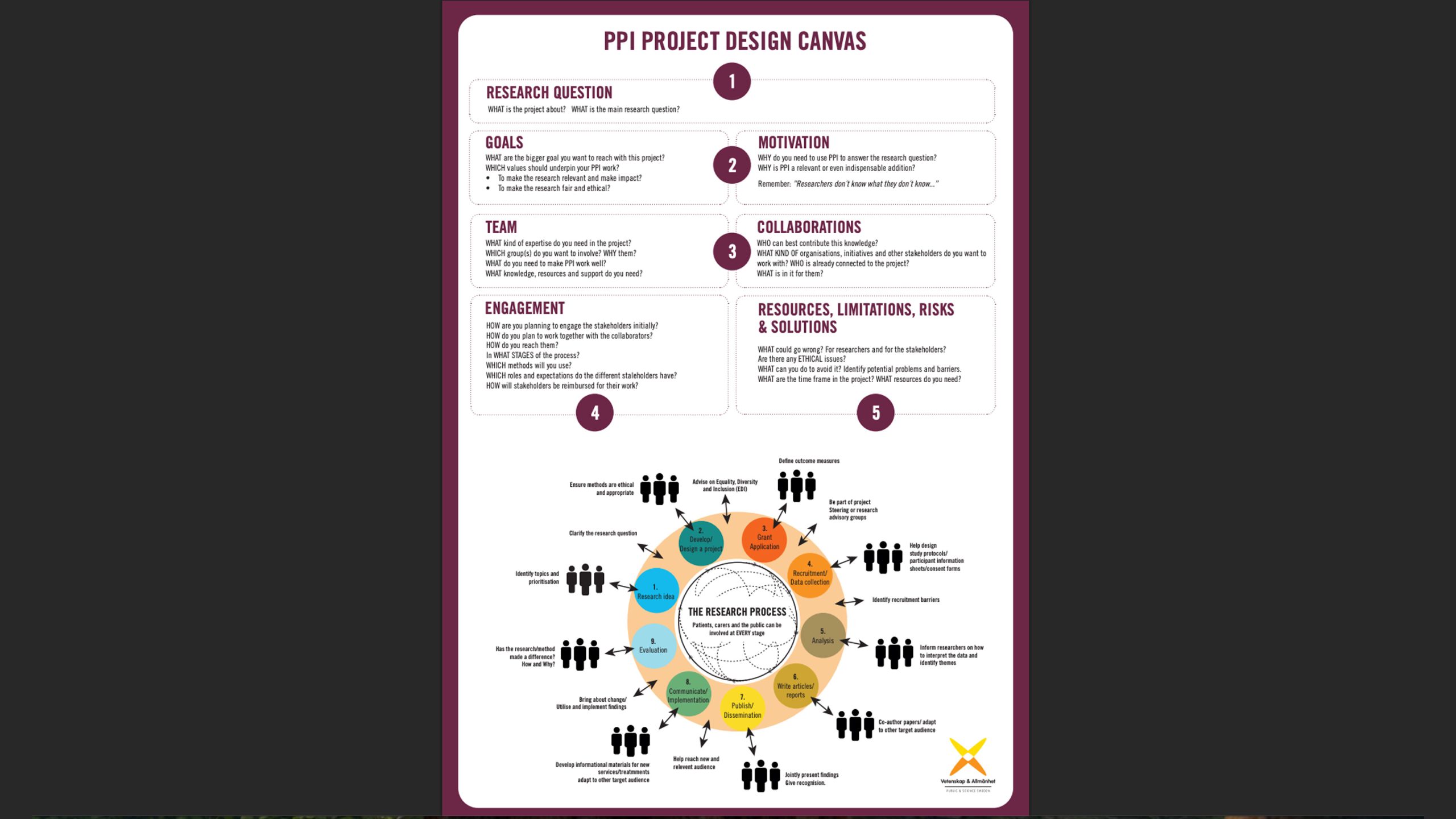
For this workshop, a visual planning tool was developed specifically for PPI projects: the PPI Project Design Canvas. The tool can be used in all forms of citizen science and co-created research, both at the planning stage and throughout the research process.
The discussions emphasised:
- the importance of early involvement when defining the research question
- the need for clear and inclusive communication
- lowering barriers to participation – “Dare to give it a go!”
Workshop 3: Ethics – New questions for co-created research
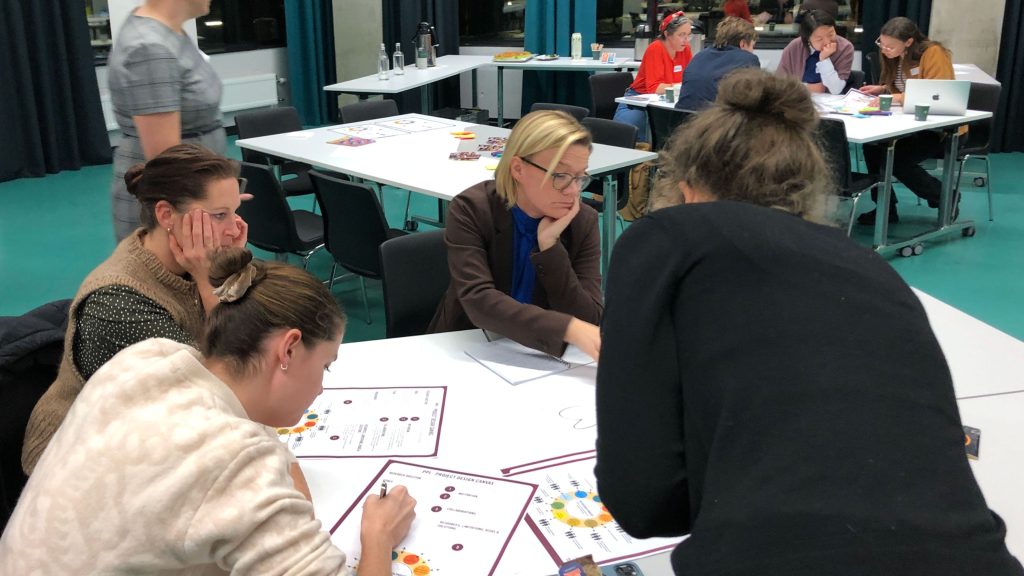
The third workshop addressed the ethical dimensions of co-creation and PPI. Professor Ulrik Kihlbom presented key ethical principles and dilemmas, followed by Per Sandin, (SLU), a researcher and member of the Swedish Ethical Review Authority, who discussed how co-creation and citizen science relate to ethical review processes
Participants then worked with fictional personas to create concrete descriptions of hypothetical co-researchers. This approach helped to illuminate risks and ethical considerations such as representation, power dynamics, information requirements, and risk–benefit assessments. Because the personas had different backgrounds and circumstances, they also had different motivations for participating and therefore required different forms of communication and involvement.
The discussions showed that:
- ethical issues are central to co-created research, but often unclear
- researchers are uncertain about when PPI requires ethical approval and how it relates to GDPR and data sharing, as well as how to manage power imbalances, expectations and risks
- ethical dilemmas vary significantly depending on who is involved in the project
Workshop 4: Funding – What do research funders want to see?
The final workshop focused on co-creation from the perspective of research funders. Representatives from Forte and the Swedish Research Council, together with KI researcher Markus Saarijärvi, shared advice and responded to participants’ questions.
Funders emphasised that co-creation should be described as an integrated part of the research project. When this is clearly articulated, costs related to PPI can be funded. However, it is essential that the rationale and relevance of PPI are clearly explained in the application.
Conclusions and recommendations
Strengthen practical support for researchers. Universities such as Karolinska Institutet would benefit from developing support materials and central resources, for example:
- checklists and templates for co-created research (such as the PPI-project Design Canvas)
- guidance on reimbursement models and agreements
- support with contacts and communication with patient organisations and other target groups
The workshop series showed that researchers need:
- advice on ethics, GDPR and roles
- process support when planning PPI
- skills development in co-creation methods
Even a limited support structure could have a significant impact. While a formal network must be driven by researchers’ own engagement and interest, universities can facilitate this by, for example, organising regular lunch seminars, enabling experience exchange between researchers, and increasing internal visibility of ongoing co-created research projects. This could lay the foundation for a self-organising network of researchers interested in PPI.
The use and development of the PPI Project Design Canvas is published as a Scientific Article: The PPI project design canvas: a structured tool for planning public and patient involvement in research
Created: 25 February 2026
Last edited: 25 August 2026