Gästkrönika: A fresh perspective on my own research – and how to communicate it
"I have learned a lot about all kinds of different efforts to break science out of its bubble and bring it into the world." Marlene Schülein reflects on her internship at Public & Science Sweden.
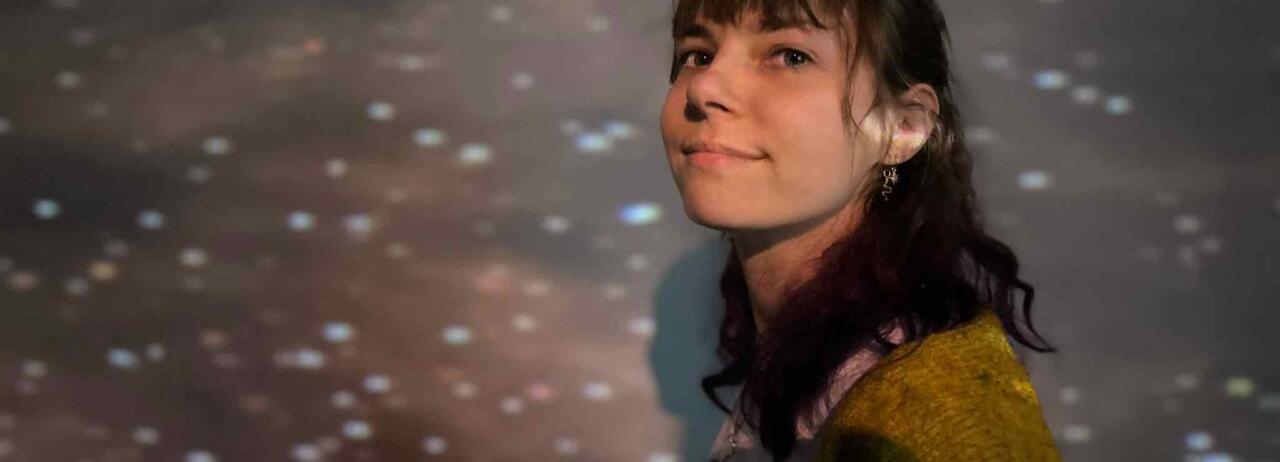
Marlene Schülein

Doing my master’s degree in immunology during the height of the CoV-19 pandemic left me with a keen awareness of the importance of science communication. Again and again, any mention of what I study would end with me having to give an improvised talk about vaccines or viruses, a challenge I did not feel prepared for.
Three years into my PhD, the challenge remains. How do I best communicate what I do, what I know and what I don’t know to different audiences, without relying only on the technical terms I’ve learned throughout my studies? I believe it’s important for people (and for scientists!) to keep in mind that we’re just humans too, but what can I actually do to help break down these perceived barriers?
It seemed like the perfect chance to get some insight into science communication efforts in Sweden, to get out of the academic lab setting for once in my life and to finally practice my Swedish in a real-life setting.
When I came across the opportunity to do an internship at V&A (Public & Science Sweden), I didn’t have to think long to apply. It seemed like the perfect chance to get some insight into science communication efforts in Sweden, to get out of the academic lab setting for once in my life and to finally practice my Swedish in a real-life setting.
While I was somewhat nervous about what I’d gotten myself into on my first day, it didn’t take long for my nerves to disappear. The team at V&A is a fantastic group of people who not only had a lot of patience for my broken Swedish, but also took a lot of time and care to explain their mission and several of their ongoing projects to me.
Over my four weeks at V&A, I have learned a lot about all kinds of different efforts to break science out of its bubble and bring it into the world. I learned to reflect on who “the public” is, and how to consider the needs target audience – a teenager and their grandparent don’t necessarily communicate using the same technology or language.
Looking through the feedback of teachers, school students and researchers who took part in borrow a researcher confirmed how valuable such activities are, and has motivated me to be more proactive in science communication myself in the future.
Part of my internship work involved the låna en forskare (borrow a researcher) program, a fantastic initiative to bring scientists into classrooms. Looking through the feedback of teachers, school students and researchers who took part in borrow a researcher confirmed how valuable such activities are, and has motivated me to be more proactive in science communication myself in the future. Between giving students a more realistic view of science and scientists (we’re not all lab coat wearing Einsteins, I promise) and giving scientists the opportunity to communicate outside of their usual audience, it truly is a win-win situation for everyone involved.
I also had the chance to dive into co-creative science within Sweden and the EU, which was an eye-opening experience about all the different shapes scientific research can take and the different roles people can have in scientific projects.
It also helped me realize that my PhD has actually left me with skills that I can apply to non-laboratory settings, and reminded me how interesting it can be to have the time to deep-dive into a completely different topic for once.
All in all, this internship has been a valuable experience that taught me a lot about what goes on behind the scenes to bring together science and society and allowed me to reflect on how I communicate my research. It also helped me realize that my PhD has actually left me with skills that I can apply to non-laboratory settings, and reminded me how interesting it can be to have the time to deep-dive into a completely different topic for once.
I’m returning to my regular laboratory life with a new appreciation for V&As amazing efforts, more confidence in my Swedish and professional skills and a fresh perspective on my own research. And most importantly, I had a lot of fun!
/Marlene Schülein, PhD student & intern at Public & Science Sweden
Marlene Schülein is a PhD student in Autoimmunity and adaptive immunity in rheumatic disease at Karolinska Institute.
Marlene’s one-month internship at Public & Science Sweden is supported by the Karolinska Institutet career service.
Created: 11 March 2026
Last edited: 11 March 2026